
The Australian Diver’s Guide to Breathing Air Compressor Safety Standards
Breathing air compressors are the backbone of safe diving operations, yet meeting Australian diving standards is more complex than many realise. Getting your system right means understanding AS/NZS 2299.1 and EN 12021 requirements, from air quality testing to CO monitoring and filter cartridge maintenance. This guide breaks down what you need to know to specify, operate, and maintain compressors that deliver clean, reliable air every time you dive. Learn more here.
Key Safety Standards for Breathing Air Compressors

Understanding the intricate safety standards for breathing air compressors is essential for ensuring safe diving experiences in Australia. Let’s dive deeper into what these standards mean and why they matter.
Understanding Australian Diving Standards
When it comes to diving, safety is more than just a guideline—it’s a necessity. To ensure safety, you must grasp the Australian diving standards, which dictate the quality and safety measures for breathing air compressors. These standards are designed to protect divers from potential hazards associated with compressed air systems. By adhering to these guidelines, you’re not just following rules; you’re safeguarding lives.
AS/NZS 2299.1 and EN 12021 Explained
The standards AS/NZS 2299.1 and EN 12021 are the bedrock of diving safety. AS/NZS 2299.1 covers occupational diving operations, ensuring that all equipment meets stringent safety requirements. Explore these standards further. Meanwhile, EN 12021 focuses on the quality of breathing air, demanding that air is free from harmful contaminants. Understanding these standards is crucial for operating compressors responsibly. Knowing that your equipment meets these requirements offers peace of mind and guarantees compliance.
Pressure Equipment Compliance Basics
Pressure equipment used in diving must comply with specific standards to function safely. This involves regular inspections and maintenance, ensuring every part functions as it should. Here’s a vital insight: not all compressors are created equal. When selecting equipment, ensure it meets the necessary compliance standards. This not only ensures the safety of the divers but also extends the equipment’s lifespan, reducing long-term costs.
Essential Compliance Practices
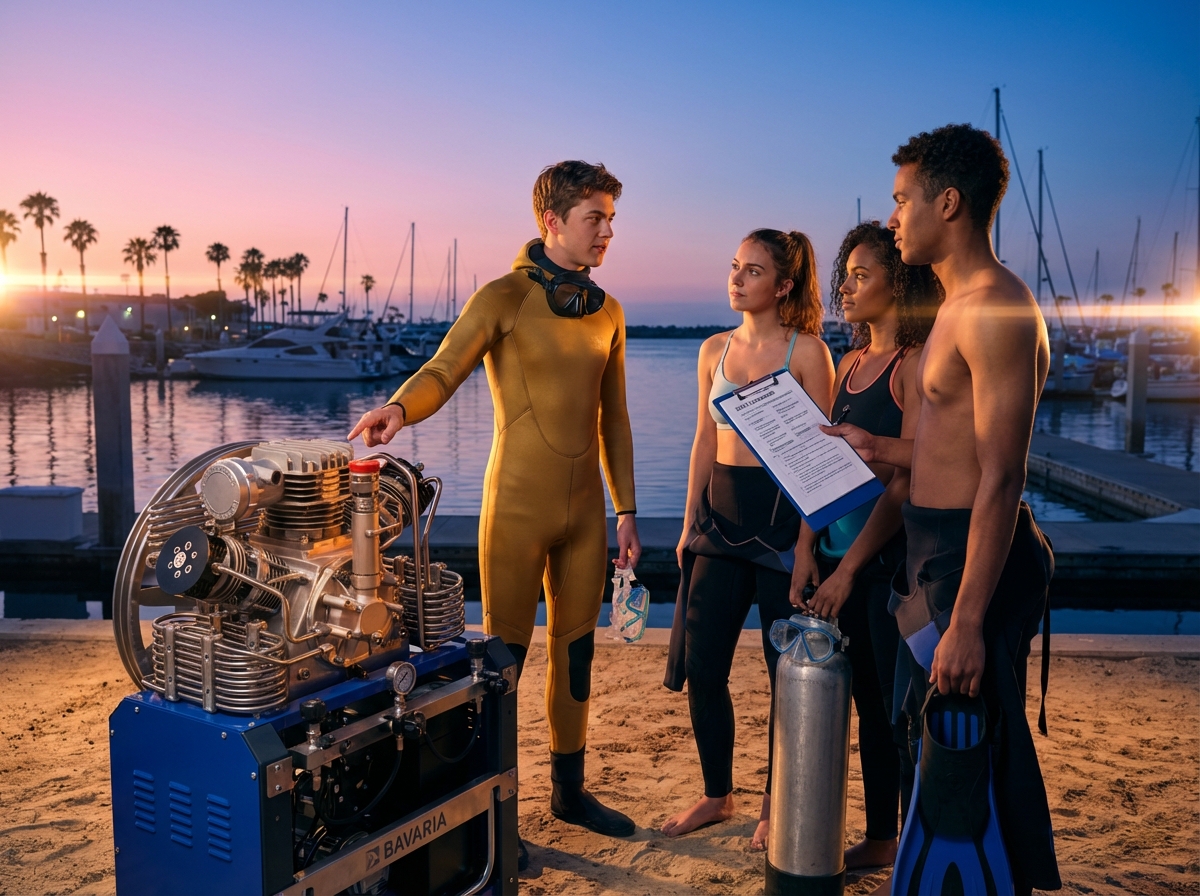
To ensure your breathing air compressor operates safely, it’s important to adhere to several key compliance practices. These are the foundational elements that ensure the air you breathe is pure and safe.
Importance of Air Quality Testing
Air quality testing is not just a routine task—it’s essential for maintaining safe diving conditions. Testing your air ensures it is free from contaminants like oil and water. Regular checks prevent potential hazards, giving you confidence that your air supply is clean and reliable. This proactive approach keeps divers safe and assures compliance with AS/NZS 2299.1 and EN 12021 standards.
CO Monitoring and Dew Point Control
Carbon monoxide (CO) is a silent threat, and monitoring it is crucial for diver safety. Implementing robust CO monitoring systems can avert potential health risks. Additionally, controlling the dew point ensures that the air is dry and free from excess moisture, which can cause equipment malfunction. This dual approach reduces risks, ensuring that your equipment remains operational and safe.
Regular Filter Cartridge Replacement
Replacing filter cartridges regularly is crucial for ensuring the purity of the air supplied by your compressor. A clean filter ensures that contaminants are effectively removed, maintaining air quality. Set a schedule for replacing cartridges; waiting too long can compromise air safety. By keeping on top of maintenance, you protect both the divers and the equipment.
Maintenance and Servicing Essentials

Routine maintenance is pivotal for the longevity and reliability of your breathing air compressor. Let’s explore the key servicing essentials that keep your system running smoothly.
Hydrostatic Testing and Condensate Management
Hydrostatic testing verifies the integrity of pressure vessels, ensuring they can safely withstand operational pressures. Regular testing prevents failures that can jeopardise safety. Condensate management is equally vital, as it prevents water accumulation that could damage the compressor. Proper management practices extend the life of your equipment and uphold safety standards.
Scheduling Compressor Servicing in Australia
Scheduling regular servicing for your compressor is a wise practice. In Australia, following a consistent service routine helps maintain equipment efficiency and compliance. Partnering with a reliable service provider ensures that all aspects of your compressor are checked and maintained. This proactive approach reduces breakdown risks and ensures uninterrupted operations.
Long-term Reliability with a 5-Year Warranty
Investing in equipment with a 5-year warranty provides long-term security. It assures you of the manufacturer’s confidence in their product, offering peace of mind. A warranty safeguards your investment, ensuring you receive support and service when needed. This commitment to reliability ensures your equipment remains operational, safe, and effective over the years.
Order Now. Breathe Better Tomorrow