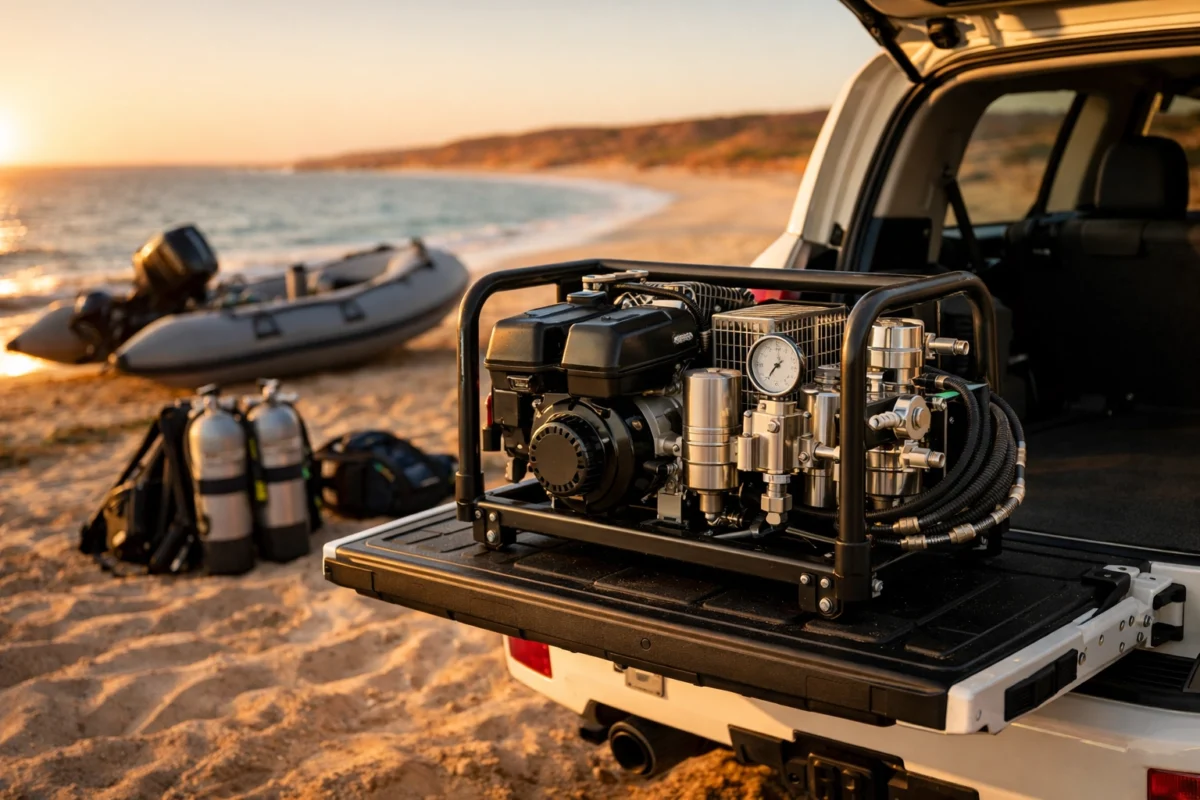
There is nothing quite like the freedom of a remote Australian dive trip. Whether you are trekking up to the Exmouth gulf, exploring the hidden gems of the Great Barrier Reef, or heading off the grid in South Australia, the last thing you want to worry about is where your next fill is coming from.
For many of us, the dream is total independence. No more rushing to the dive shop before they close on a Friday afternoon, and no more wondering about the last time their filters were changed. Owning a portable scuba compressor isn't just a luxury; for the serious Aussie diver, it’s a game-changer for safety and convenience.
At Safety Stop Australia, we aren't just retailers, we are divers and engineers who live for the underwater world. We know that when you’re 500km from the nearest town, your gear has to work. That is why we’ve dedicated ourselves to being the exclusive importer of IDE compressors. In this guide, we’ll break down exactly what you need to look for when shopping for a breathing air compressor that can handle the harsh Australian environment—and we’ll stick to real IDE product photos so what you see matches what you’ll actually run on the boat, in the shed, or out bush.
1. Why Bavarian Engineering is the Gold Standard
When it comes to high-pressure machinery, German engineering, specifically Bavarian engineering, carries a reputation for a reason. IDE compressors are manufactured in Bavaria, the same heartland that produces the world’s most refined automotive and industrial machinery.
In the diving world, "good enough" isn't an option. You are breathing the air this machine produces at depth. Precision tolerances, superior heat dissipation, and robust materials are what separate a premium 300 bar air compressor from a budget model that might fail when the temperature hits 40°C on the deck of a boat.
Benefit-Action-Result:
- Benefit: Unmatched reliability and long-term cost savings.
- Action: Choose a compressor with a Bavarian engineering pedigree (like IDE).
- Result: You get a machine that maintains peak performance for decades, ensuring every breath is as clean as the first.
2. Choosing Your Power: Petrol vs. Electric
One of the first questions we ask our customers is: "Where are you doing most of your diving?"
Petrol (The Remote Workhorse)
If you’re diving from a 4WD, a remote beach, or a boat without a massive generator, petrol is king. Models like the IDE Fun Marine 110 utilize reliable petrol engines (like the Kohler SH Series) that provide the torque needed to reach high pressures without needing a power grid.
- Pros: Total portability; go anywhere.
- Cons: Requires fuel storage and careful placement to ensure exhaust fumes don't enter the intake.
Electric (The Home & Workshop Choice)
Electric models are quieter and require less mechanical maintenance. However, they are often limited by the power supply. A standard Aussie 10A or 15A house plug can only power a compressor up to a certain size.
- Pros: Quiet operation; no exhaust fumes; lower maintenance.
- Cons: Tethered to a power source; single-phase limits fill speeds.
3. Understanding Pressure: 200 Bar vs. 300 Bar
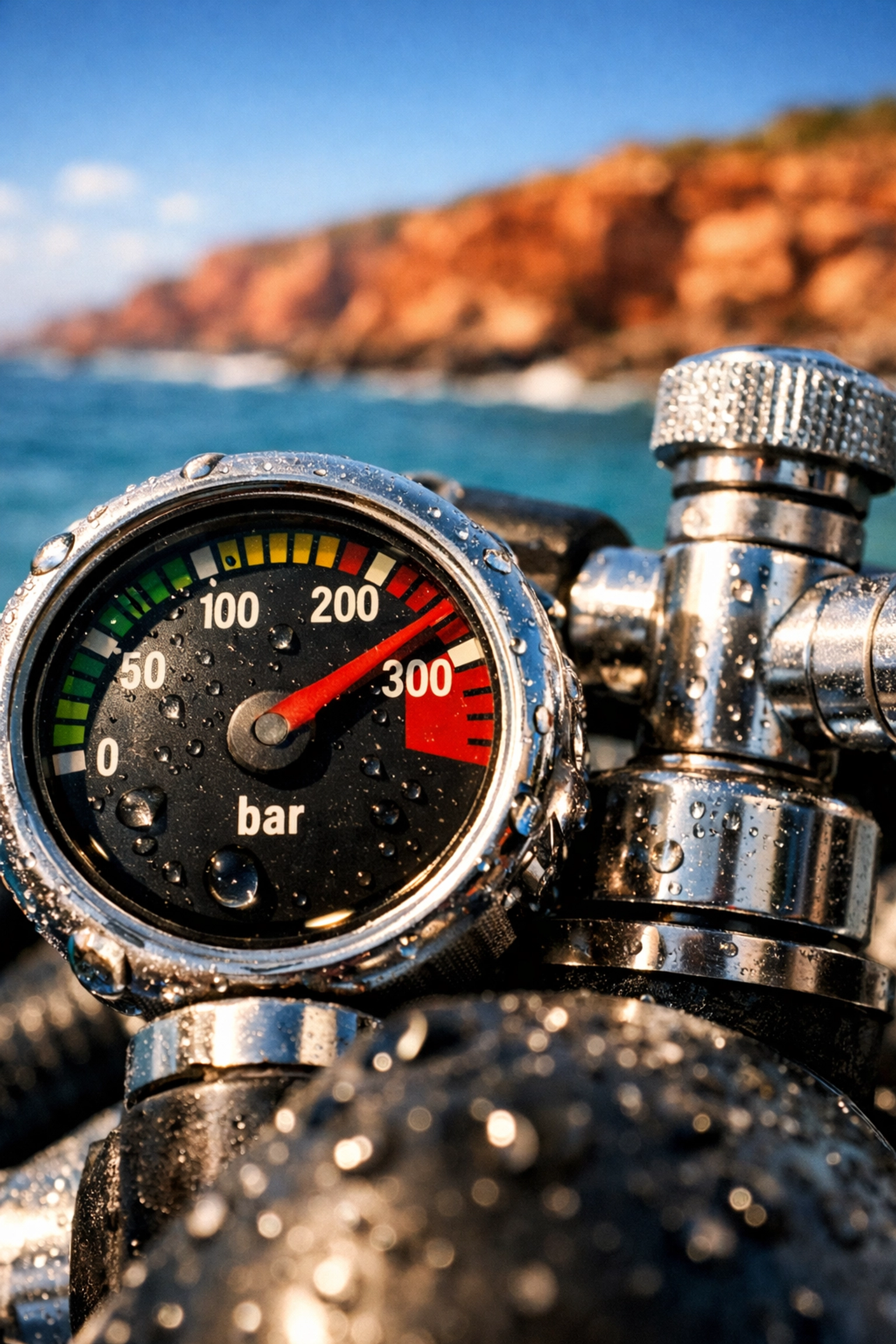
Most modern tanks are rated for either 232 bar or 300 bar. If you’re looking at a scuba compressor for sale, you should almost always opt for a unit capable of 300 bar. Even if you only fill 232 bar tanks now, having a 300 bar air compressor gives you future-proofing and the ability to fill high-pressure carbon cylinders for air rifles or emergency sets.
IDE compressors, such as the IDE Bavaria Nautic 150, are designed to handle these higher pressures with ease, featuring integrated pressure gauges and safety blow-off valves to ensure you never overfill.
4. Deep Dive: The IDE Fun Marine 110
If you are looking for the ultimate "throw it in the back of the ute" compressor, the IDE Fun Marine 110 is the benchmark.
This unit is a favorite among Aussie spearos and recreational divers who value weight-to-performance ratio. It delivers clean, dry breathing air at 100 L/min. The robust frame is designed to take the knocks of travel, and its compact footprint means it won’t hog all the space in your boat.
Key Specs:
- Engine: 6.5 HP Kohler Petrol.
- Pressure: Up to 300 bar.
- Portability: High, features easy-carry handles and a reinforced frame.
- Application: Perfect for private boat owners and remote camping trips.
5. The Professional Choice: IDE Bavaria Nautic 150
For those who need a bit more "grunt", perhaps you’re filling tanks for a group of mates or running a small commercial operation, the IDE Bavaria Nautic 150 is the step up you need. Available in both electric (EM) and petrol versions, this unit offers a higher charging rate of 150 L/min.
The Nautic series is built for heavier duty cycles. It features enhanced cooling systems which are critical for the Australian summer. Overheating is the number one killer of small compressors; the Nautic 150's design ensures that even during back-to-back fills, the air remains cool and the components remain within safe operating temperatures.
6. Air Purity: Because Every Breath Matters
This is the most critical part of the conversation. When you compress air to 300 bar, any impurities, moisture, oil vapor, or carbon monoxide, become concentrated and highly toxic.
A high-quality breathing air compressor must have a sophisticated filtration system. IDE compressors use high-capacity filter cartridges that exceed international standards (EN12021).
- Moisture Removal: Prevents internal tank corrosion.
- Carbon Filtration: Removes odors and oil vapors.
- CO Catalyst: An essential safety layer for petrol-driven units.
At Safety Stop Australia, we emphasize that maintenance isn't optional. We provide all the necessary consumables and expert advice to keep your air hospital-grade.
7. Certifications and Standards: Trust the Badge
Don't be fooled by cheap imitations found on generic marketplace sites. A compressor is a pressure vessel that can be dangerous if not manufactured to strict standards.
IDE compressors carry the TÜV Austria certification. This isn't just a sticker; it means the manufacturer is audited and the equipment is tested to withstand the extreme stresses of high-pressure air. Furthermore, IDE's compliance with NATO/NAMSA standards speaks to the military-grade reliability you are getting for your personal use.
8. Why Buy from Safety Stop Australia?
We know there are other options out there, but here is why Aussie divers choose us:
- Exclusive Importers: We work directly with IDE in Bavaria. There is no middleman, meaning we have the best technical knowledge of the product.
- Local Stock: We keep compressors and spare parts right here in Australia. You won't be waiting months for a filter or a valve to arrive from overseas.
- Expert Support: When you call us, you’re talking to someone who knows how to service these machines. We provide instructional advice on longevity and cost-efficiency.
- Tailored for the Outdoors: We understand the salt, the heat, and the dust of Australia. We help you select the model that will survive the environment you dive in.
Benefit-Action-Result:
- Benefit: Total peace of mind and local warranty support.
- Action: Purchase your IDE compressor through Safety Stop Australia.
- Result: A seamless ownership experience with a partner that supports your diving lifestyle long after the sale.
Summary: Making the Final Call
Selecting the right portable scuba compressor comes down to three things:
- Reliability: Can it handle the heat? (Bavarian engineering says yes).
- Air Quality: Does it meet EN12021 standards? (IDE does).
- Support: Is there someone locally to help when you need a service? (Safety Stop Australia is here).
If you’re a solo diver looking for portability, the IDE Fun Marine 110 is your best bet. If you want a stationary setup for a home workshop or have higher volume needs, look at the IDE Bavaria Nautic 150.
Ready to take control of your air supply? Check out our full range of high-pressure compressors or get in touch with us for a chat about which model fits your diving style.
