
Marine-proof maintenance: keeping breathing air compressors reliable in Australia’s conditions
Salt spray and humid air are relentless foes for breathing air compressors in Australia’s marine environment. If your compressor isn’t maintained with marine-proof care, corrosion and contamination can quietly chip away at reliability and air quality. This guide lays out clear steps to protect your system, extend its lifespan, and keep your breathing air safe—backed by Safety Stop Australia’s expertise and support tailored to Australia’s toughest coastal conditions. For more information on maintaining safety and performance, visit this marine compressor safety guide.
Essential Maintenance Practices

When it comes to maintaining compressors in marine environments, understanding the threats is essential. Let’s dive into the details of how to protect your equipment.
Combatting Salt Spray Corrosion
Salt in the air is a persistent enemy. Left unchecked, it can rust and damage your compressor over time. The solution is proactive maintenance:
-
Regular Cleaning: Rinse your compressor with fresh water frequently, especially after exposure to saltwater. This helps remove salt residues.
-
Protective Coatings: Apply anti-corrosion sprays or coatings to metal parts. These act as a barrier against moisture and salt.
-
Inspection Routine: Keep a vigilant eye on your compressor. Spotting corrosion early can save you from extensive repairs.
By following these steps, you can keep your compressor in top shape. Remember, prevention is better than cure.
Protecting Air Quality Standards
Maintaining air quality is crucial. Contaminated air can be harmful to users and degrade compressor performance.
-
Filter Checks: Ensure filters are clean and replaced regularly. Filters play a vital role in keeping air quality high.
-
Testing: Regularly test your air supply against standards like AS/NZS 2299.1. This prevents unseen contaminants from compromising safety.
-
Seals and Gaskets: Inspect seals for wear. Replacing worn seals prevents leaks, ensuring consistent air quality.
High air quality is non-negotiable. It’s a critical aspect of safety for all users.
Extending Compressor Service Life
A longer service life means more value from your investment. Here’s how to achieve that:
-
Scheduled Maintenance: Follow a strict maintenance schedule. Regular care prolongs equipment life.
-
Component Upgrades: Consider upgrading older components. Newer parts often offer better performance and durability.
-
Professional Servicing: Engage professionals for regular check-ups. They can identify issues that might be missed otherwise.
Taking these steps ensures your compressor remains reliable over the long haul.
Specific Compressor Considerations
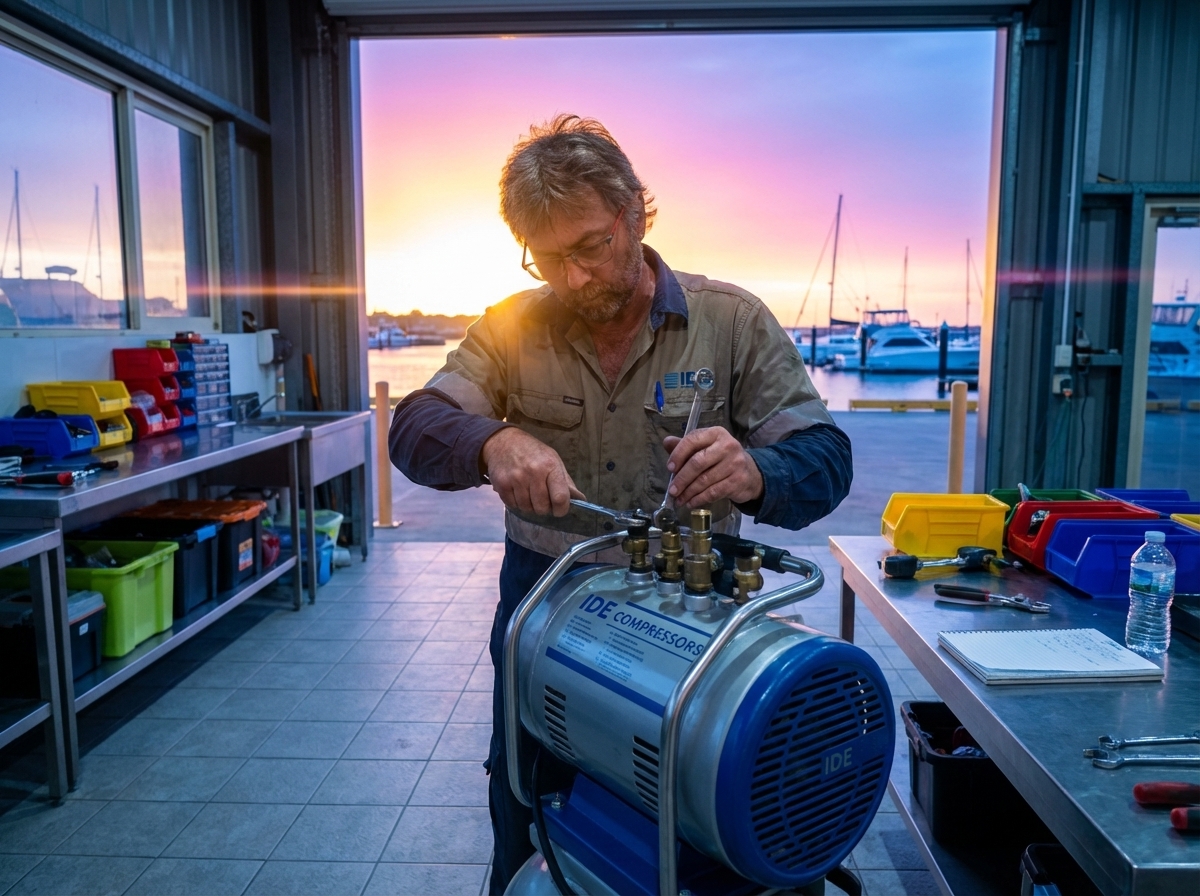
Choosing the right components and setup is key to optimal performance. Let’s explore some specific considerations for your compressor.
Choosing the Right Compressor Oil
The oil you use can significantly impact performance. Selecting the right type is crucial:
-
Synthetic Oils: These are often preferred due to their stability and performance under varied conditions. Opt for oils like IDE ULTIMATE for best results.
-
Regular Changes: Change your oil regularly. Old oil can lose its effectiveness and lead to wear.
Correct oil choice and maintenance are fundamental for efficient compressor operation.
Importance of Automatic Condensate Drains
Condensate drains are vital for keeping moisture out of your system. Here’s why they matter:
-
Automatic Systems: These systems operate without manual intervention, ensuring consistent moisture control.
-
Reduced Downtime: Automatic drains decrease the need for frequent manual checks and interventions, saving time.
Implementing automatic drains can increase efficiency and reduce workload.
Effective Intake Placement Strategies
Where you place your air intake matters. It influences air quality and performance:
-
Avoid Contaminants: Position intakes away from exhausts or pollutant sources. This ensures clean air supply.
-
Elevation: Placing intakes higher can reduce the risk of drawing in water or debris.
Thoughtful placement of air intakes is a small step that makes a big difference.
Support and Resources

Safety Stop Australia is here to guide you through every step, ensuring your equipment is always in peak condition.
Safety Stop Australia Expertise
Our team provides unmatched expertise, ensuring your equipment is always performing at its best. We offer tailored advice to meet your specific needs, whether you’re operating in coastal regions or offshore.
Marine Compressor Maintenance Checklist
A comprehensive checklist can be a lifesaver. Our marine compressor maintenance checklist covers all essential maintenance tasks to keep your compressor running smoothly.
Booking a Consultation with Our Team
For personalised guidance, consider booking a consultation with our experts. We provide bespoke solutions tailored to your operational requirements, ensuring your equipment is always safe and reliable.
Following these guidelines will not only enhance your compressor’s performance but also ensure the safety of those relying on it. Remember, maintaining your equipment is an ongoing process, and Safety Stop Australia is here to support you every step of the way.