
How to optimise breathing air compressor ventilation and cut contamination risk
Breathing air compressor ventilation isn’t just about keeping your gear cool—it’s your frontline defence against CO, NOx, and other contaminants that can compromise air quality. Poor ventilation can silently shorten filter life and push your system out of compliance with AS/NZS 2299.1 and EN 12021 standards. In this post, you’ll find practical steps to optimise compressor airflow, manage heat and moisture, and protect your breathing air no matter where you operate. For more information on air quality and ventilation, you can visit this link: https://www.epa.gov/indoor-air-quality-iaq/ventilation-and-respiratory-viruses.
Practical Ventilation Design Tips

Designing ventilation for your breathing air compressor isn’t just a good idea, it’s vital. Let’s explore how to ensure clean intake air, protect against the elements, and manage humidity effectively.
Clean Air Intake Siting
Choosing the right spot for your intake is like putting a cherry on top of a cake. It’s essential. Place your intake away from potential contaminants like vehicle exhaust or industrial emissions. If you’re near boats, distance your compressor from diesel fumes to limit NOx exposure. Think about height too: higher placements can reduce the risk of pulling in ground-level pollutants. Remember, clean air leads to safer systems.
Ducting and Weather Protection
Ducting isn’t just about airflow, it’s about protecting your system from the weather. Use sturdy materials that can withstand the local climate, whether it’s rain, strong sun, or salty sea air. Cover your ducts to prevent water ingress which can damage components and reduce efficiency. Keep ducts short and straight to optimise airflow. Weatherproofing your setup ensures long-term reliability and compliance with standards.
Humidity Management for Filter Life
Humidity is a sneaky culprit that shortens filter life. A proper setup can help you manage it. Use a dehumidifier or invest in a condensate management system to reduce moisture levels. High humidity can lead to quicker saturation of your activated carbon filters, reducing their lifespan. Consistent monitoring and adjusting of humidity levels can save on maintenance costs and ensure the longevity of your filters. Learn more about water vapour contamination here.
Specific Setups for Vessels and Mobile Stations
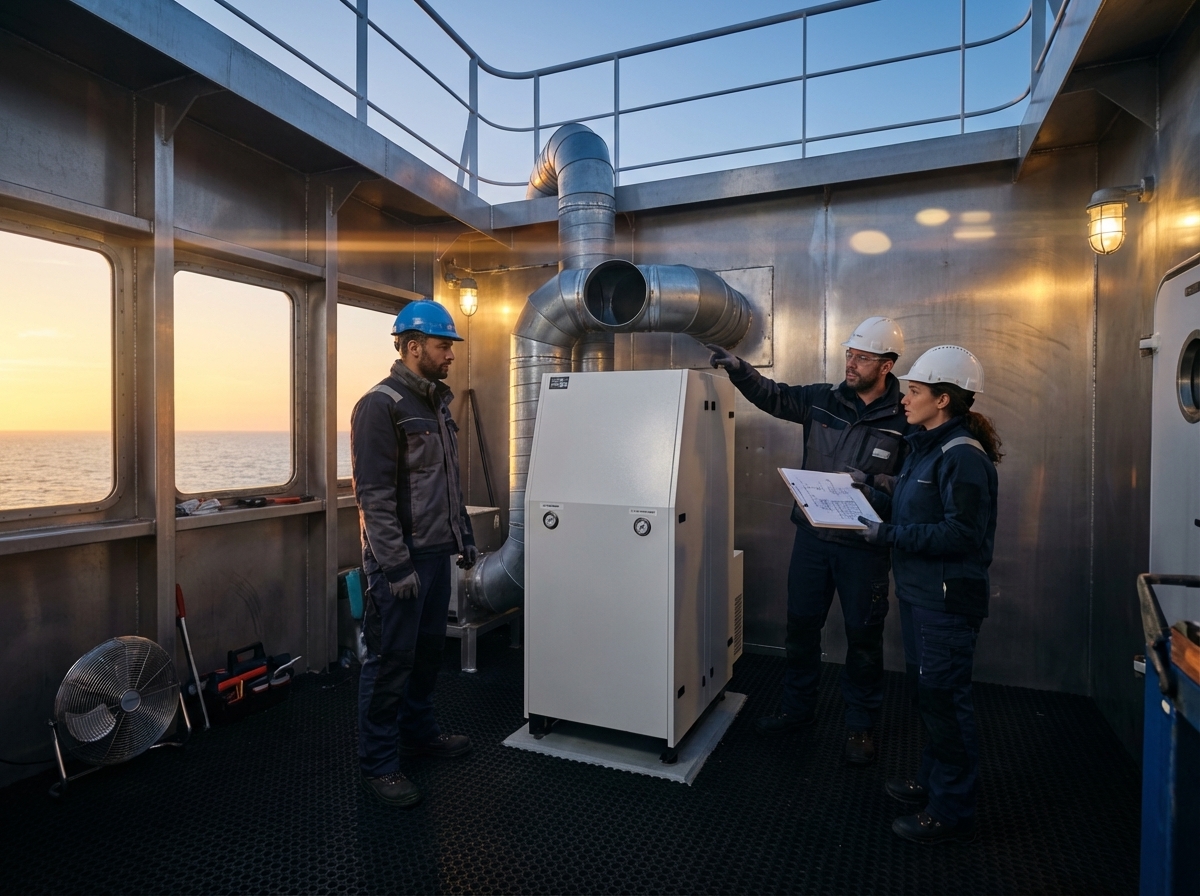
When your operations take you to the sea or the road, your compressor setup must adapt. Let’s delve into the essentials for marine environments, mobile fill stations, and remote intake solutions.
Marine Compressor Ventilation Essentials
Marine environments pose unique challenges, but with preparation, they can be managed. Ensure your compressor is shielded from saltwater spray, which can cause corrosion. Use non-corrosive materials wherever possible. The yacht compressor intake should face away from potential pollution sources, like engine exhaust. Regular checks for salt build-up are crucial to prevent premature wear and tear. Proper ventilation on board safeguards the compressor’s performance and extends its lifespan. Check this article for in-depth understanding of air safety on marine vessels.
Mobile Fill Station Safety Considerations
Safety is paramount when setting up mobile fill stations. Position your intake to avoid exhaust and other airborne pollutants. Use a remote kit for air intake to ensure clean air, even in crowded environments. Install a CO monitor to detect harmful gases and integrate automatic shutdown features for added safety. These measures ensure the air you deliver is safe and compliant, whether you’re on a construction site or at a sporting event.
Remote Intake Kits and CO Monitoring
Remote intake kits are your best friends in challenging locations. They allow you to place your intake in cleaner air spaces, away from immediate threats. Pair them with CO monitors to catch contaminants early. An inline CO monitor can automatically shut down systems if unsafe levels are detected, preventing accidents. This setup is vital for ensuring air quality and compliance with standards, even in remote areas. OSHA provides guidance on air quality standards.
Maintenance and Compliance Strategies
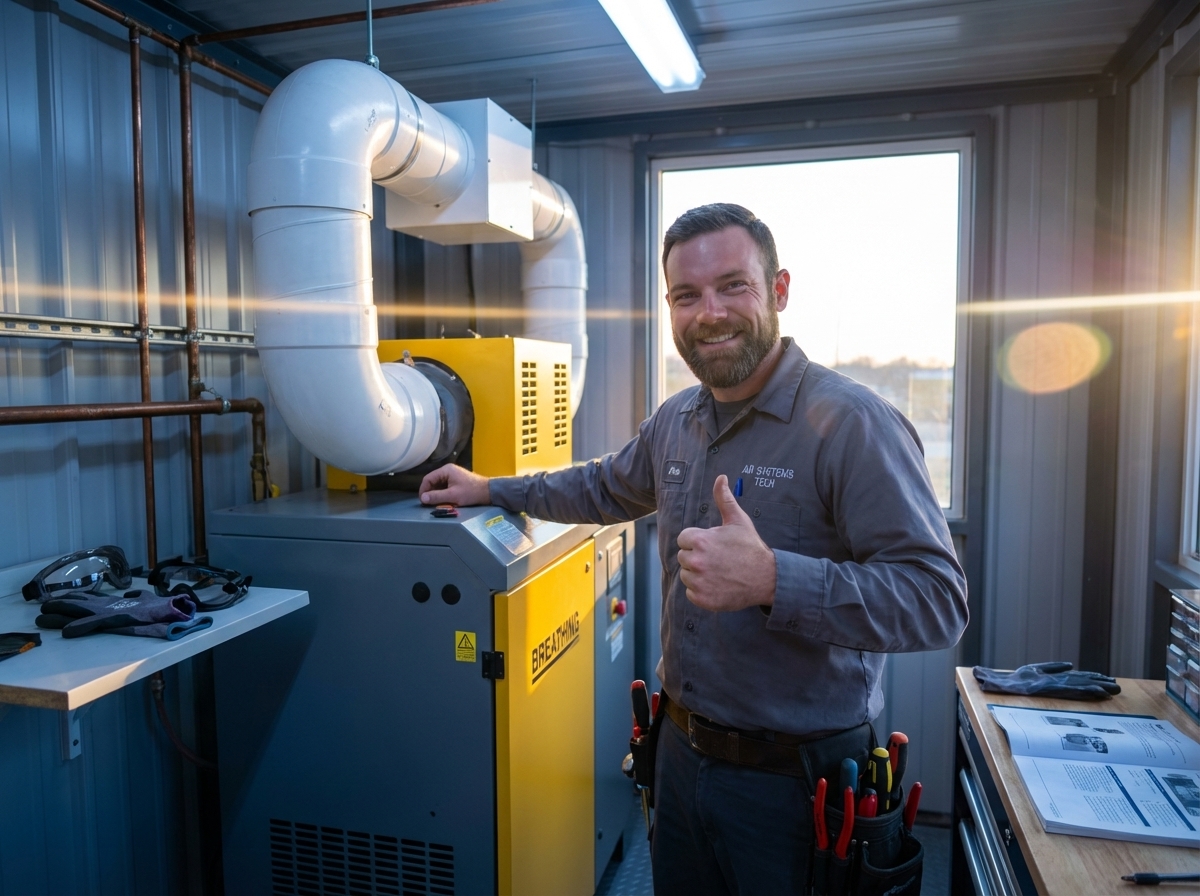
Regular maintenance and compliance checks keep your system in top shape. Here, we’ll cover essential procedures, monitoring techniques, and compliance checklists to ensure optimal performance.
Fuel and Maintenance Procedures
Routine maintenance is the backbone of a reliable system. Use quality fuel to reduce NOx emissions and change filters regularly. Check for any blockages that might impede airflow. Regular servicing keeps your compressor running smoothly and helps avoid costly repairs. By keeping a maintenance log, you can track wear and tear and address issues before they escalate.
Continuous Monitoring and Shutdown Interlocks
Monitoring systems act as your eyes and ears. Continuous monitoring of air quality parameters ensures your compressor operates within safe limits. Use shutdown interlocks to stop operations if parameters exceed safety thresholds. This proactive approach prevents accidents and ensures compliance with air quality standards. Monitoring tools should be easy to read and integrated into your daily checks for maximum effectiveness.
Compressor Compliance Checklist and Standards
Compliance with standards like AS/NZS 2299.1 and EN 12021 is non-negotiable. Develop a checklist to regularly verify your system meets these benchmarks. Include checks for air purity, pressure levels, and filter conditions. Staying compliant not only guarantees safety but also builds trust with your users. It’s about ensuring your system is always up to the task.
Order Now. Breathe Better Tomorrow